In the wild a bird that shows weakness is the one the hawk takes. Every pet bird still runs that instinct, and it does not switch off because the cage is safe. So a parrot will sit up, hold its feathers flat and carry on eating long past the point where a dog would have taken itself to bed.
Which means the signs below are not early warnings. They are the moment the bird stopped being able to pretend. Come on the day you notice, not the day after.
What to look for, and how fast to move
Three dots means come now. Two means today. One means book this week rather than leaving it.
Come nowSitting on the floor of the cageA bird on the cage floor is not resting. It has usually run out of the strength to hold a perch, and by that point it has been ill for days.
Come nowTail bobbing with every breathBreathing that moves the whole tail means the bird is working hard for air. Respiratory disease in birds moves faster than owners expect.
Come nowStraining, or a swollen abdomen in a femaleEgg binding. This is measured in hours, not days, and it is the one bird emergency that most often ends well if you come straight in.
Come nowBleeding from a feather or a nailA bird has very little blood to spare. Press a clean cloth firmly against it and come now — do not wait to see if it stops.
TodayFluffed up and silent all dayFluffing conserves heat. A bird that stays fluffed, stops talking and sleeps through the day is unwell, not relaxed.
TodayDroppings changed colour, texture or numberThe clearest daily signal you have, and the reason we ask you not to clean the cage before you come.
TodayEating less, or husks no longer splitA bird picking at seed rather than cracking it is often unable to crack it. Check the tray: whole husks mean food is being moved, not eaten.
This weekFeather plucking, or a bald patchRarely just a habit. Pain, skin disease, poor diet, liver trouble and boredom all look identical from the outside, which is why it needs looking at rather than guessing at.
Read this one even if you read nothing else
What kills pet birds in this country
Almost none of it is disease. Most of the birds we lose, we lose to an ordinary household.
Overheated non-stick pansThe most lethal thing in a UAE kitchen for a bird. An empty non-stick pan left on high heat gives off fumes that can kill a parrot in minutes, with no warning and nothing anyone can treat. Birds should never be in or near the kitchen.
Aerosols, incense, oud and scented candlesA bird’s lungs are far more efficient than ours. That is exactly why anything airborne reaches them first and hardest.
An all-seed dietThe most common thing underneath the birds we see. Seed is not a diet — it is the part of a diet a bird would choose if allowed to choose.
Avocado, chocolate, caffeine, onion, apple seedsAll toxic, and all routinely offered by people who meant well.
Ceiling fansA flighted bird and a moving fan is one of the injuries we see most, and one of the least survivable.
Open waterPans, sinks, buckets, toilets. A bird that lands on water rarely gets back out of it.
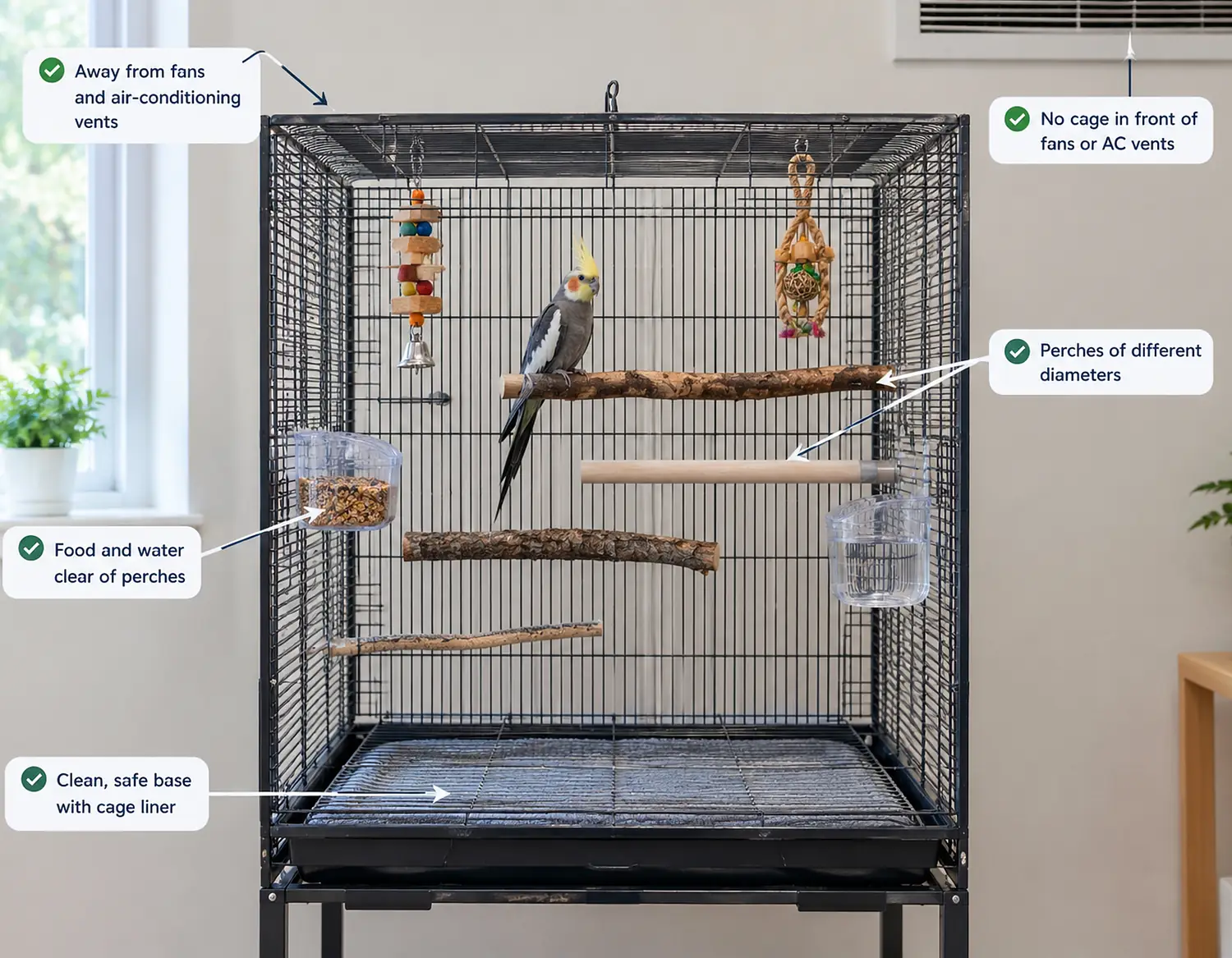
Air conditioning on the cageA cold draught over a cage all night does the same thing to a bird that it does to you, only faster.
Cats — even a scratch that looks like nothingThe bacteria in a cat’s mouth and claws will kill a bird days later. Any cat contact is a same-day antibiotic case, every time, however fine the bird looks.
Before you set off
Four small things that make the appointment twice as useful.
Cover the carrier.A covered bird is a calm bird, and the cover keeps the draught off on the way in.
Do not clean the cage first.The last day of droppings tells us more than most of the tests would.
Bring the food itself.The actual packet or tub, not the name of it. Labels settle arguments.
Keep them warm.A sick bird loses heat quickly. A warm car matters more than a fast one.
Questions owners ask
Which birds do you see?
African greys and parrots generally, budgerigars, cockatiels, lovebirds and conures; finches and canaries; pigeons and chickens; and Eurasian kestrels. If your bird is not on that list, call and ask rather than assuming — the answer is more often yes than no, and we would rather tell you on the phone than have you drive here to find out.
My bird seems fine. Is a check-up worth it?
More than for most animals, because a bird that looks fine is the only bird you can examine calmly. A first visit is largely a husbandry and diet review, and that is where the problems we treat two years later usually start.
Do you clip wings?
Yes, and we will talk it through with you first rather than simply doing it. A clip is not permanent — the feathers grow back at the next moult — and done badly it leaves a bird that drops rather than glides, which is how keel injuries happen. Done properly, with the right feathers and both wings even, it is safe and it is reversible. Tell us what you are worried about, open windows or a ceiling fan or a door left ajar, and we will tell you honestly whether clipping is the answer to it.
Can you come to the house for a bird?
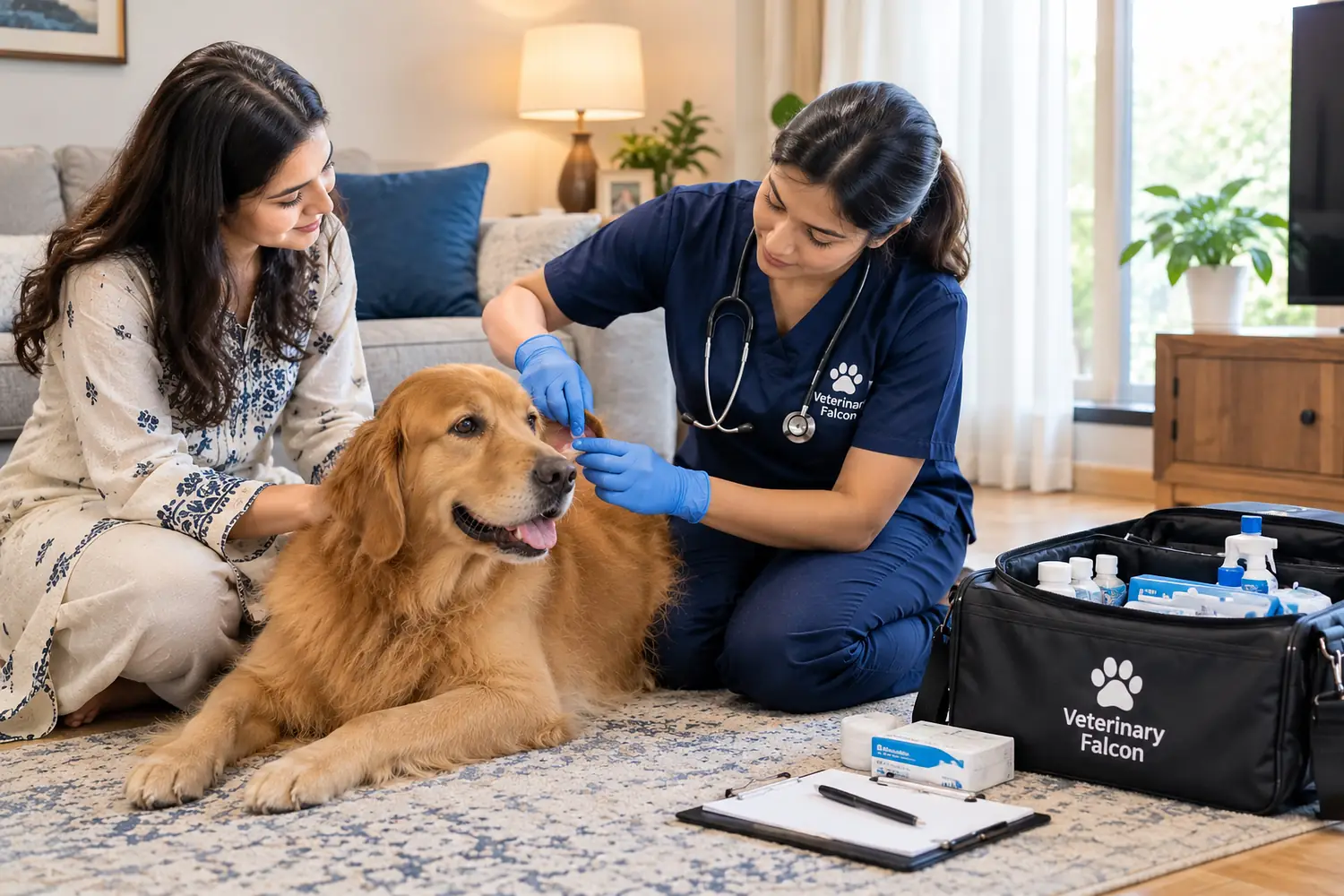
Yes, and for birds it is often the better choice, because the journey is usually the most stressful part of the whole appointment. Seeing the cage, the food and the room it lives in also tells us things you would never think to mention.
How quickly can you see an unwell bird?
Same day. Say on the phone that it is a bird — we triage them differently, because they deteriorate faster and they hide it for longer.
Can you tell me if my bird is male or female?
Yes, by DNA sexing. Most parrots, greys and budgerigars are not visually sexable at all, and a great many owners have a bird named for the wrong one. It needs only a few feathers or a drop of blood, taken here in a couple of minutes, and the answer comes back from the lab.
My bird panics at hands and bites.
Most do, and it is not a problem. Tell us before we open the carrier. Towel handling done confidently is quick and far less frightening for the bird than repeated gentle attempts that do not work.
These cards are a live feed, not copy. Every one is pulled straight from your Google Business Profile — the stars, the words, the name and the date are whatever Google holds that day. Nothing here is written by us or by you.
Every review on our Google Business Profile is written by an owner, not by us. We do not publish selected quotes here — read them all, in full and unedited, on Google.
The rest of it, for birds too
Handling, timing and triage all change for a bird. The service behind them does not.
 Veterinary Falcon
Pet Clinic LLC
Get a quote