Pay at the end — no upfront payment MOCCAE approved · Ajman DED 201835822 · 24/7 emergency available +971 50 345 0534 WhatsApp
Veterinary Falcon Pet Clinic Veterinary Falcon Pet Clinic LLC Get a quote
Scaling · Polishing · Extractions

Pet dental care — because bad breath is not normal

It is the most ignored sign in veterinary medicine. By the age of three, most dogs and cats already have dental disease — and they hide the pain of it remarkably well.
Book a dental check +971 50 345 0534
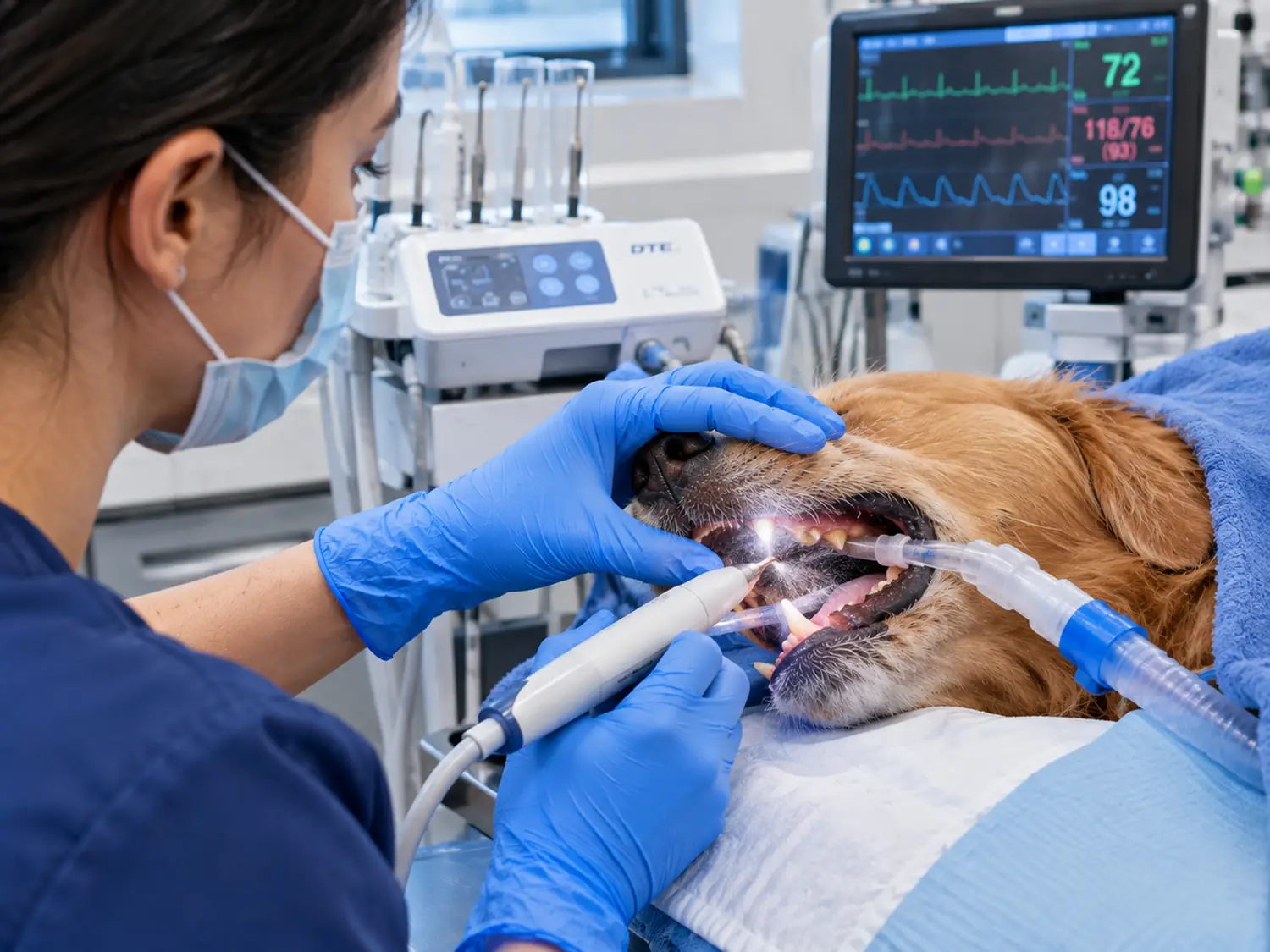
A dental scaling procedure in progress
Look in their mouth tonight

Signs worth booking for

Lift the lip and look at the back teeth, where it always starts. Any one of these is worth a check.

Bad breath It is not normal in a pet
Brown or yellow tartar Along the gumline, worst at the back
Red or bleeding gums Especially after chewing
Dropping food Picking it up and putting it down again
Chewing on one side Or swallowing food whole
Drooling more Sometimes tinged pink
Pawing at the mouth Or rubbing the face on the floor
Loose or broken tooth Often after chewing something hard

Pets almost never stop eating because of dental pain — they adapt around it, which is exactly why owners miss it for years. A pet still finishing its bowl can have a mouth that genuinely hurts.

Worth saying plainly

“Anaesthesia-free” cleaning is not dentistry

It is offered widely, it is cheaper, and it looks like it worked. Here is what it actually does.

It cleans the part you see Scraping the visible crown makes teeth look white. The disease is below the gumline, and that is untouched.
Nothing can be probed or charted A conscious animal cannot be probed tooth by tooth. Pocket depth and mobility are measured, not guessed — and that is where the disease is found.
The reassurance is the danger White teeth convince an owner the mouth is healthy, and a painful tooth then goes untreated for another year or two.

We are not saying it to sell you an anaesthetic. We are saying it because owners come to us after paying for it for years, and the mouth underneath is worse than when they started.

Eight stages

What a proper dental involves

All of it in one visit, and you are called before anything is removed.

01 Examination & estimate We look at the mouth awake, tell you what we can already see, and quote before anything is booked.
02 Pre-anaesthetic bloods Kidney and liver function checked the same morning, so the anaesthetic is planned around your actual pet.
03 Anaesthesia, monitored A named person watches the monitor for the whole procedure — not a machine left beeping in an empty room.
04 Full mouth charting Every tooth probed and recorded. Pockets, mobility and gum recession measured, not eyeballed.
05 Scaling above and below the gum The part that matters. Disease lives under the gumline, where a visible-surface clean never reaches.
06 Extractions only where needed If a tooth must come out we call you first. Nothing is removed while you are sitting in the car park wondering.
07 Polishing Scaling leaves microscopic grooves that plaque grips. Polishing smooths them, which is why it is not cosmetic.
08 Recovery & home plan Warmed recovery, pain relief, and a plan for keeping the mouth this way — because a dental you repeat yearly is a plan that failed.

The four grades, in plain words

We will tell you which grade your pet is at and show you why. The first two are reversible; that is the whole reason to look early.

Grade 1 Gingivitis Gums red at the margin, no bone loss yet. Entirely reversible with a clean and home care.
Grade 2 Early disease Up to a quarter of the attachment lost. Still reversible in most teeth if treated now.
Grade 3 Established disease Between a quarter and a half lost. Some teeth are saveable, some are not.
Grade 4 Advanced disease Over half the attachment gone. Painful, and the affected teeth usually need to come out.
Afterwards

What actually works at home

Ranked honestly, including the one we would rather you stopped buying.
Brushing Works Daily is the gold standard, three times a week still helps. Pet toothpaste only — human toothpaste is not safe for them.
Dental diets & approved chews Helps The larger kibble shapes and VOHC-accepted chews genuinely reduce plaque. They slow disease; they do not reverse it.
Water additives Marginal Some evidence, small effect. Fine alongside brushing, not a substitute for it.
Bones, antlers & hard chews Risky A common cause of the broken teeth we end up extracting. If you cannot dent it with a thumbnail, it can crack a tooth.
A dental is a day visit

We collect in the morning and bring them home.

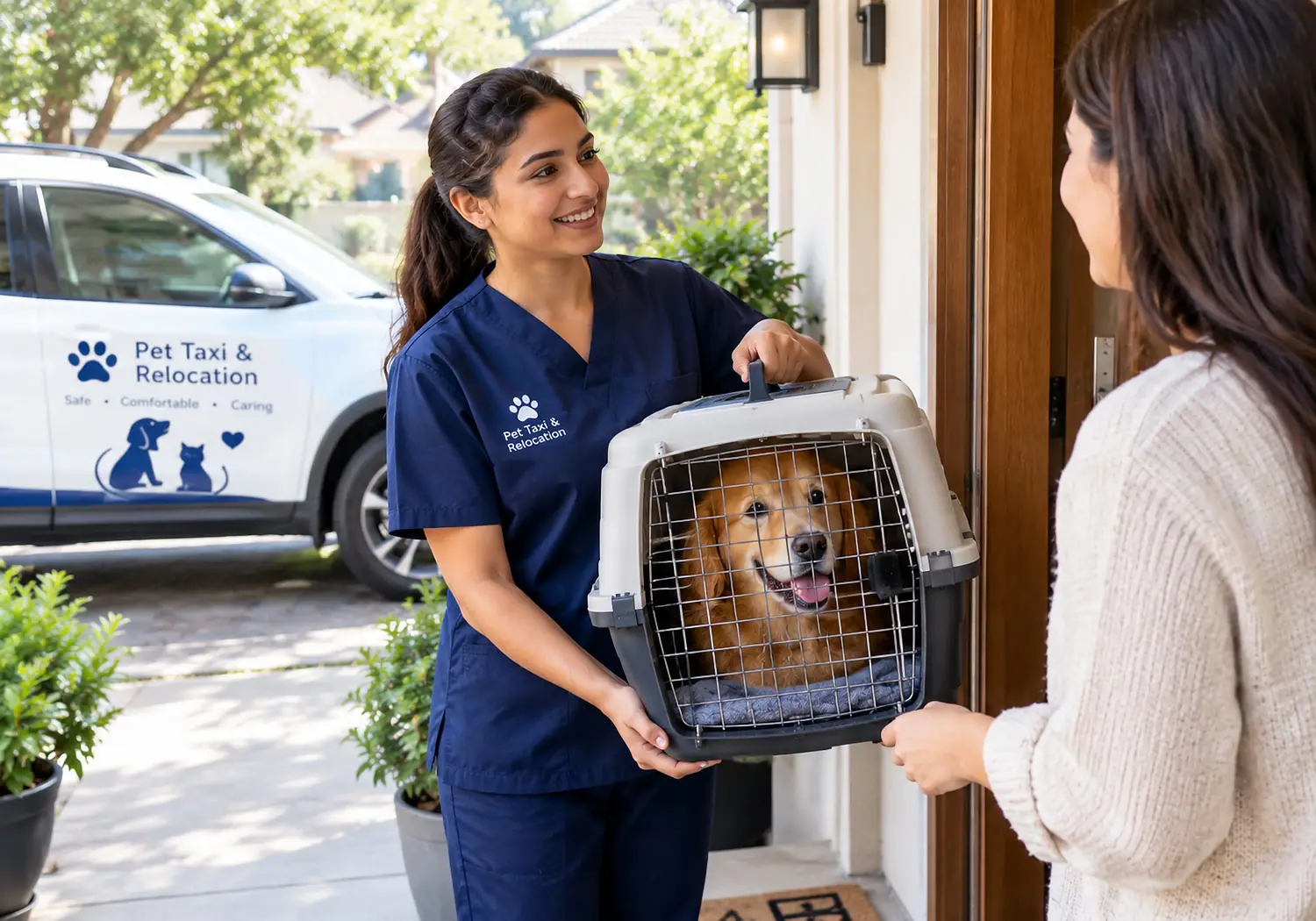
Your pet needs to be here for the anaesthetic and the recovery, which is most of a working day. If that is the reason it keeps being postponed, our vehicle collects and returns them — and we call you with the findings before anything is extracted.

+971 50 345 0534 About our pet taxi
A carrier handed across to an owner beside the clinic's vehicle

Questions owners ask

Why does a dental need anaesthesia at all?

Because the disease is under the gumline and the only way to clean and probe there is with the animal completely still and the airway protected. A conscious pet cannot be asked to hold its mouth open while a sharp instrument works below the gum.

My pet is old. Is the anaesthetic safe?

Age is not a disease. What matters is organ function, which is exactly what the pre-anaesthetic bloods tell us, and a monitored anaesthetic planned around the result. Leaving a painful mouth untreated for years carries its own risk, and it is not a small one.

How often will this need doing?

It depends on the mouth and on what happens at home. Some pets need a dental every year or two; many go far longer with regular brushing. We will tell you honestly which of those yours looks like.

Will my pet be able to eat afterwards?

Yes — usually that evening, softened food for a few days if there were extractions. Pets who have had painful teeth removed very often start eating better than before, which surprises owners every time.

Is bad breath really a problem?

It is the single most ignored sign in veterinary medicine. Bad breath is bacteria; bacteria at the gumline is infection; and a mouth that smells has usually been uncomfortable for a while. Pets hide dental pain extremely well.

Do you take dental X-rays?

Not at present. We scale, chart, probe and extract here, and we will tell you honestly when a tooth is one where an X-ray would change the decision — in which case we say so rather than guess. We would rather you heard that from us now than found it out mid-procedure.

Lift the lip. Then book.

Send us a photo of the back teeth on WhatsApp if you are not sure. We will tell you honestly whether it needs doing now or whether it can wait.

Book a dental check Send a photo