Pay at the end — no upfront payment MOCCAE approved · Ajman DED 201835822 · 24/7 emergency available +971 50 345 0534 WhatsApp
Veterinary Falcon Pet Clinic Veterinary Falcon Pet Clinic LLC Get a quote
Puppies, kittens & adults · Ajman

What your pet needs, and when

The full schedule for puppies and kittens is below — ages, doses and what each one prevents. No guessing, and no vaccine given because it was on a list.
Book a vaccination +971 50 345 0534
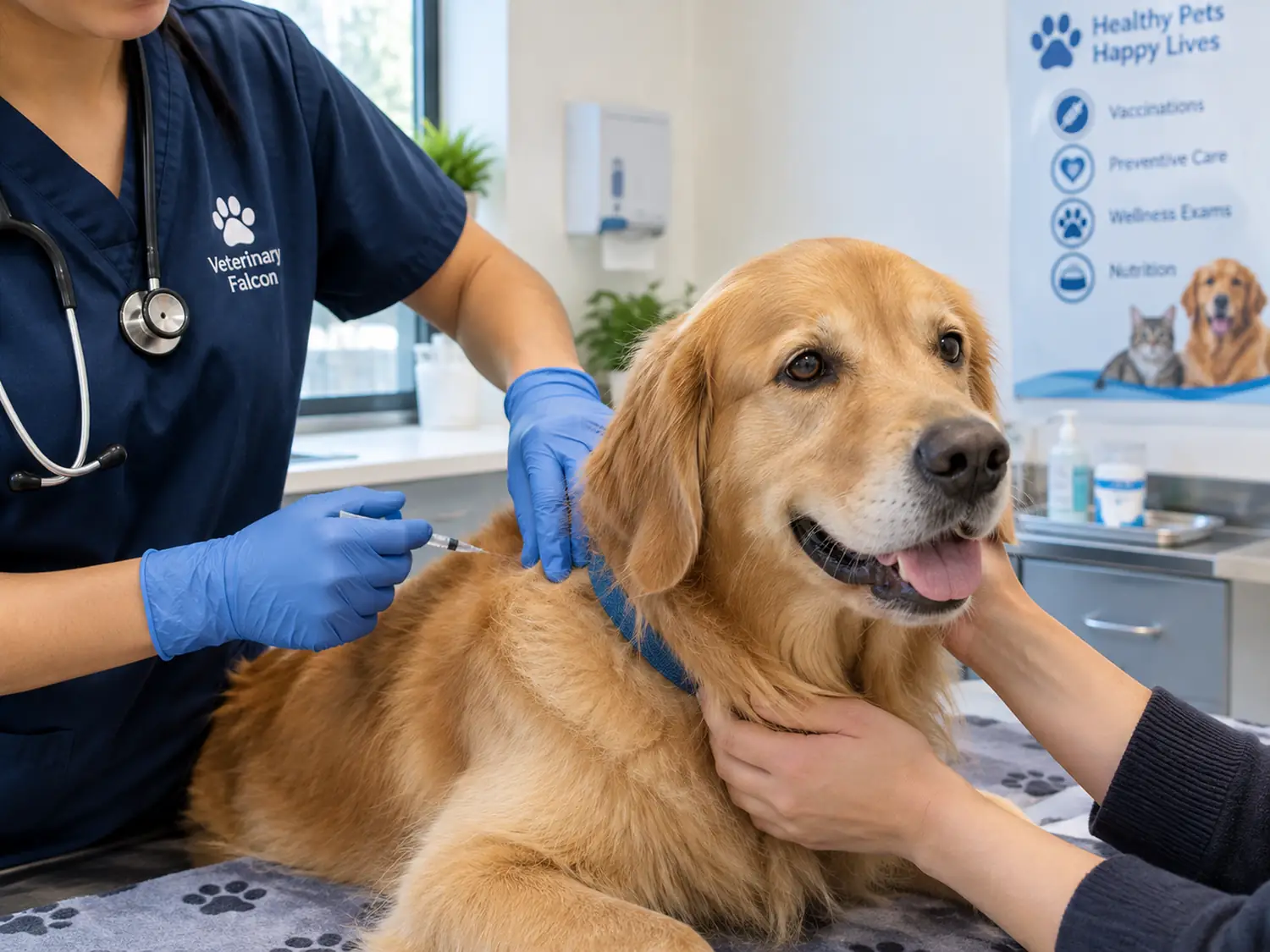
A dog being vaccinated on the table while a hand steadies it
The schedule

Puppy and kitten courses

Ages are a guide, not a rule — a rescue of unknown age or a pet that arrived mid-course gets its own plan. What does not change is that a primary course is finished, not started.

Puppies Dogs · first year
Age Vaccine Why this one
6–8 weeks First DHPP Distemper, hepatitis, parvovirus and parainfluenza — the combination that does the heavy lifting.
10–12 weeks Second DHPP The second dose is what starts building real protection. Skipping it undoes the first.
14–16 weeks Third DHPP Completes the primary course. Until this one, a puppy is not fully covered.
From 12 weeks Rabies Required for registration and for any travel later. Needs a microchip in place first if travel is likely.
Optional Kennel cough Before boarding, daycare or grooming with other dogs. Many boarding kennels here insist on it.
Yearly after Boosters What is repeated and how often depends on the vaccine and your dog's life. We set it per animal, not per calendar.
Kittens Cats · first year
Age Vaccine Why this one
6–8 weeks First FVRCP Feline herpesvirus, calicivirus and panleukopenia. Panleukopenia is the one that kills kittens.
10–12 weeks Second FVRCP The dose that matters most, as maternal immunity fades around this point.
14–16 weeks Third FVRCP Completes the primary course.
From 12 weeks Rabies Required for registration and travel. Indoor cats are not exempt if they will ever fly.
If outdoors Feline leukaemia For cats who go outside or live with a positive cat. We test before vaccinating, not after.
Yearly after Boosters Indoor-only cats often need less than outdoor cats. We will say which yours is.

Until the course is finished, keep a puppy off public grass and away from unknown dogs, and keep a kitten indoors. Parvovirus and panleukopenia both survive in the ground for months.

What you are actually preventing

Worth knowing, because the names on the record mean very little on their own.

Parvovirus Dogs Severe bloody diarrhoea and dehydration in puppies. Survivable with intensive care, frequently not survived without it.
Distemper Dogs Attacks the gut, lungs and then the nervous system. Dogs that recover are often left with permanent damage.
Infectious hepatitis Dogs Liver damage, and in young dogs it can kill before there is time to treat.
Leptospirosis Dogs Spread through water and rodent urine. Damages kidneys and liver, and it also passes to people.
Panleukopenia Cats The feline equivalent of parvovirus. Extremely contagious and very often fatal in kittens.
Cat flu (herpes & calici) Cats Rarely fatal in adults but frequently permanent — a cat that gets it can carry flare-ups for life.
Feline leukaemia Cats Suppresses the immune system over months or years. Spread by fighting and by grooming each other.
Rabies Both Always fatal once signs appear, and transmissible to people. This is the one that is not optional.

Four times it stops being a choice

01 Travelling out of the UAE Rabies is mandatory everywhere, and most destinations require the microchip to be implanted before the rabies dose for the record to count.
02 Municipality registration Rabies and a microchip are the usual requirement.
03 Boarding, daycare or grooming Almost every facility asks for a current vaccination record, and many ask for kennel cough on top.
04 Living with other animals A new puppy or kitten joining a household is the most common way a disease gets in. Course finished before introductions.
Order matters for travel. The microchip has to go in before the rabies vaccination, or most countries will not accept the record and the dose has to be repeated. If there is any chance your pet will fly, tell us at the first appointment — not at the one before the flight.
We send the reminder Boosters are the thing owners miss, and a lapsed course sometimes means starting over. Your pet's due dates sit in our records and we message before they fall due — not three months after.
The record is written to travel Names, batch numbers, dates and the vet's stamp, in the form an airline or a municipality will accept. Ask for a copy any time; we keep the original.

Questions owners ask

My pet is an adult with no records. Start again?

Usually yes, and it is not wasted. Without proof, a vaccine is treated as never given — and a restart is two doses, not the full puppy course. Bring whatever records you do have, even partial ones.

Is my indoor cat really at risk?

Less, but not none. Panleukopenia survives in the environment for months and walks in on shoes. And if your cat will ever fly, rabies is not optional whatever its lifestyle.

Do you over-vaccinate?

No, and we will tell you when something is not needed. Not every vaccine is annual, and an indoor-only cat's schedule is not a working dog's. We set it per animal, which occasionally means a shorter list than you expected.

My pet reacted last time.

Tell us before, not after. Mild tiredness for a day is common and not a reaction. Facial swelling, vomiting or collapse is, and it changes how and whether we proceed — sometimes with pre-treatment, sometimes by splitting the doses.

Can you vaccinate at home?

Yes, on a home visit, and for a multi-cat household that is often far less stressful. It has to be a healthy-animal appointment though — an unwell pet should not be vaccinated at all, anywhere.

Do birds need vaccinating?

Not routinely. There is no standard vaccination course for companion birds the way there is for dogs and cats, so a healthy parrot or budgie is not on a schedule. What does matter for birds is the annual health check, a proper diet, and parasite and infection screening if a new bird is joining the house — that is where the real risk sits. Bring your species to us and we will tell you what, if anything, applies to it.

Schedule

Book the vaccination

Cats, dogs and birds. If you are not sure what is due, fill this in anyway and send a photo of the record — we will work out what is needed before you come.

Prefer to talk? +971 50 345 0534 or WhatsApp.

Name and number only, used to answer you and nothing else. How we handle it.

While your pet is with us

One visit can cover more than one thing, which is usually the difference between a plan that happens and a plan that does not.
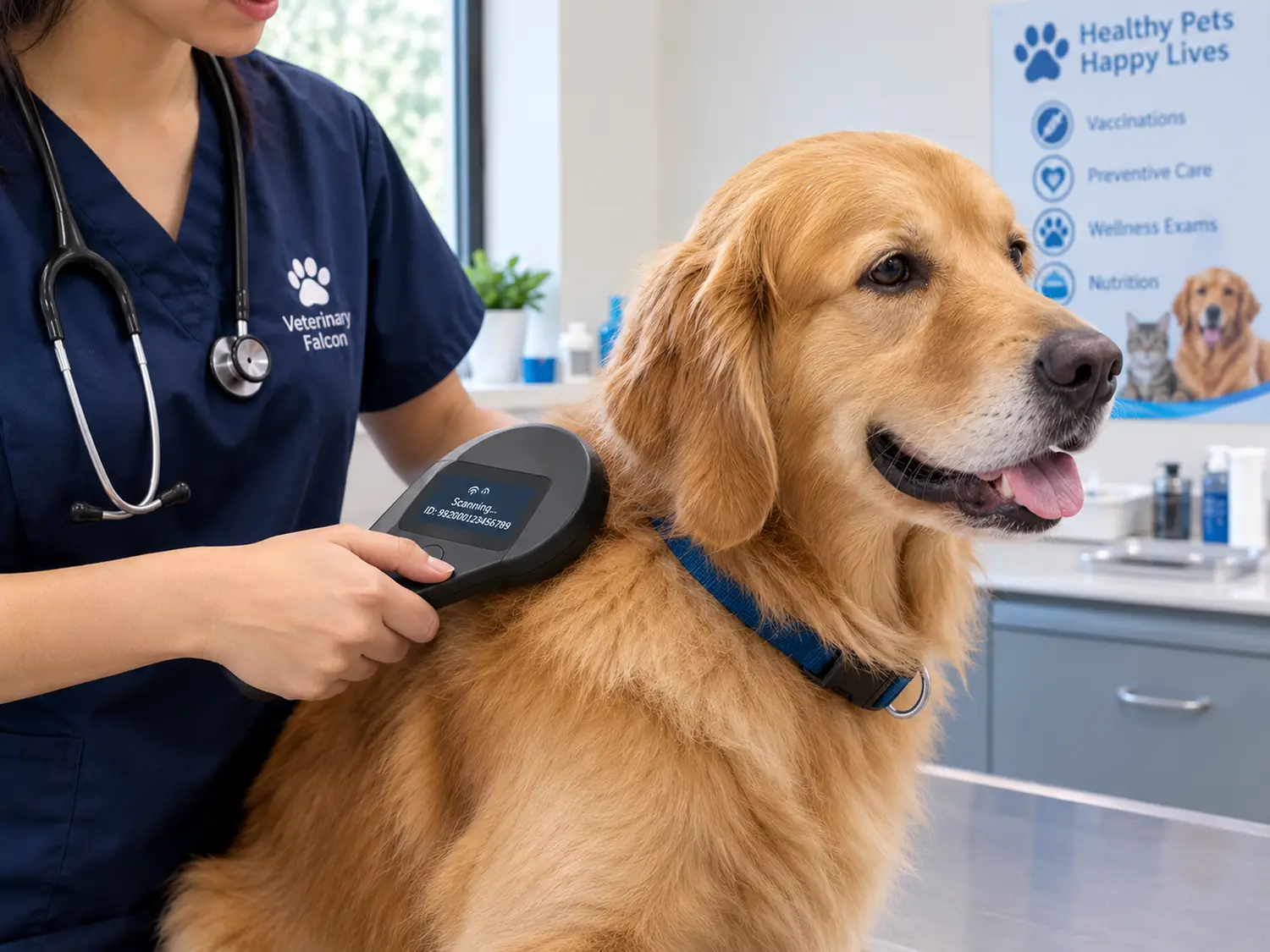
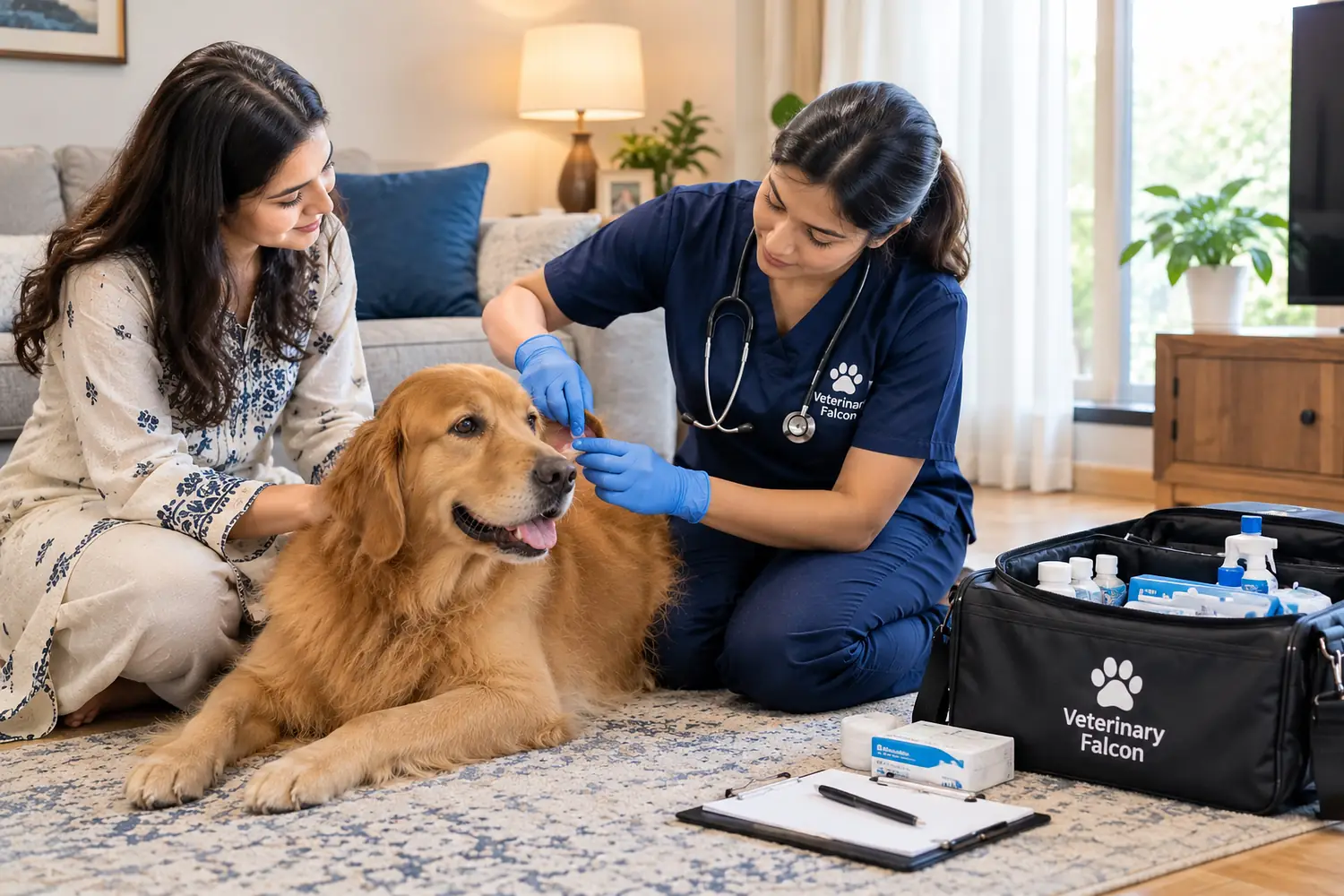
Scroll for more
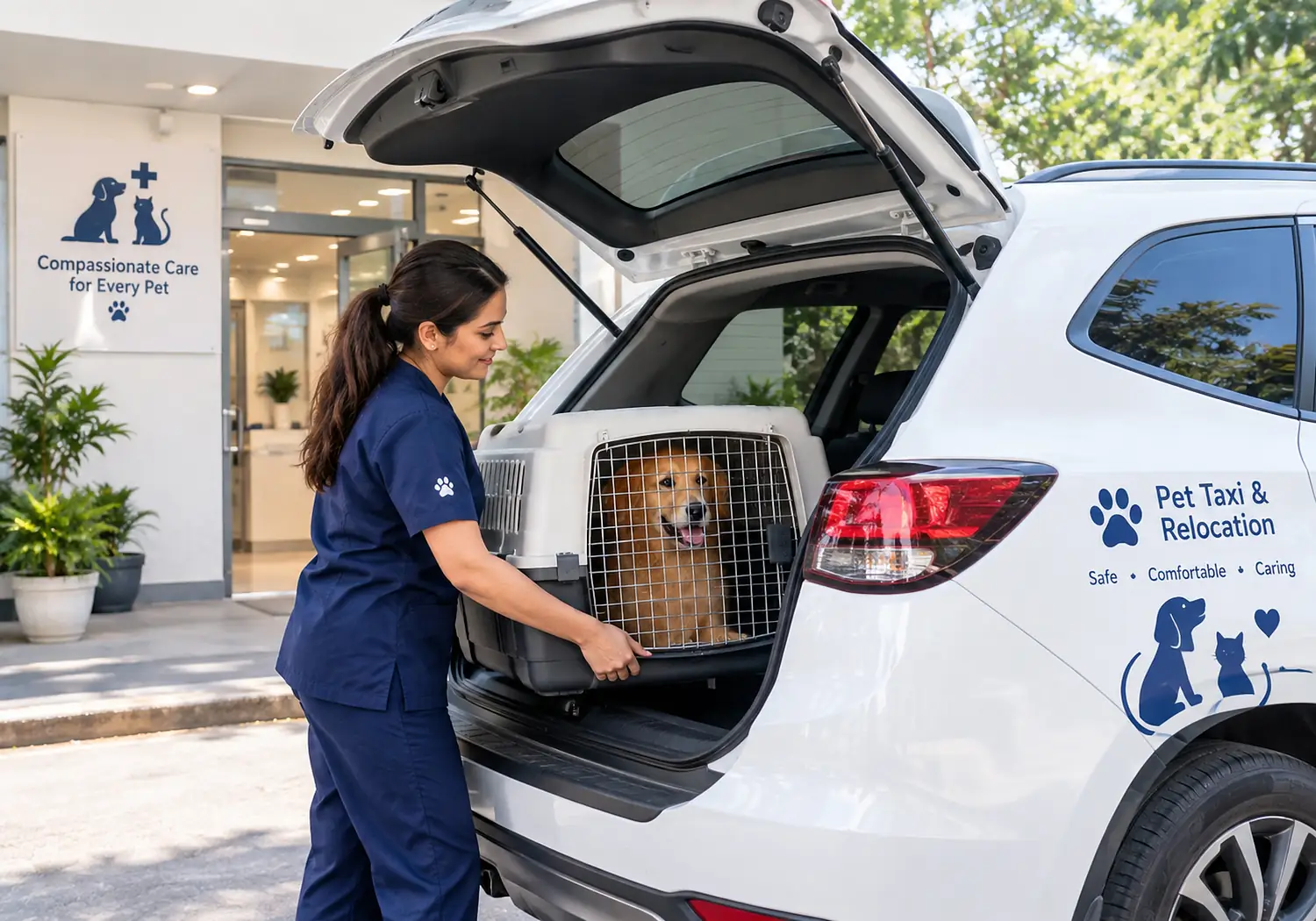
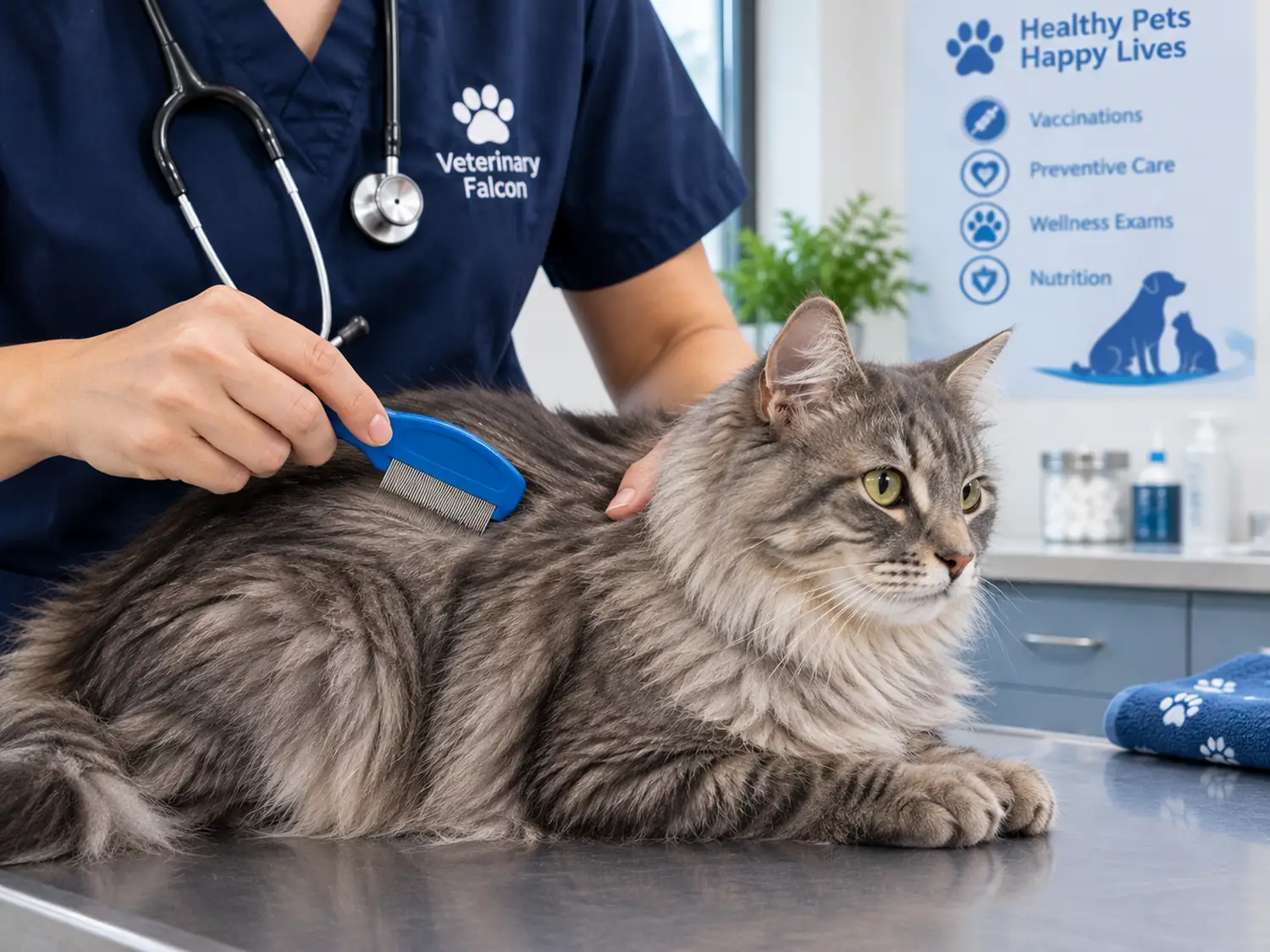
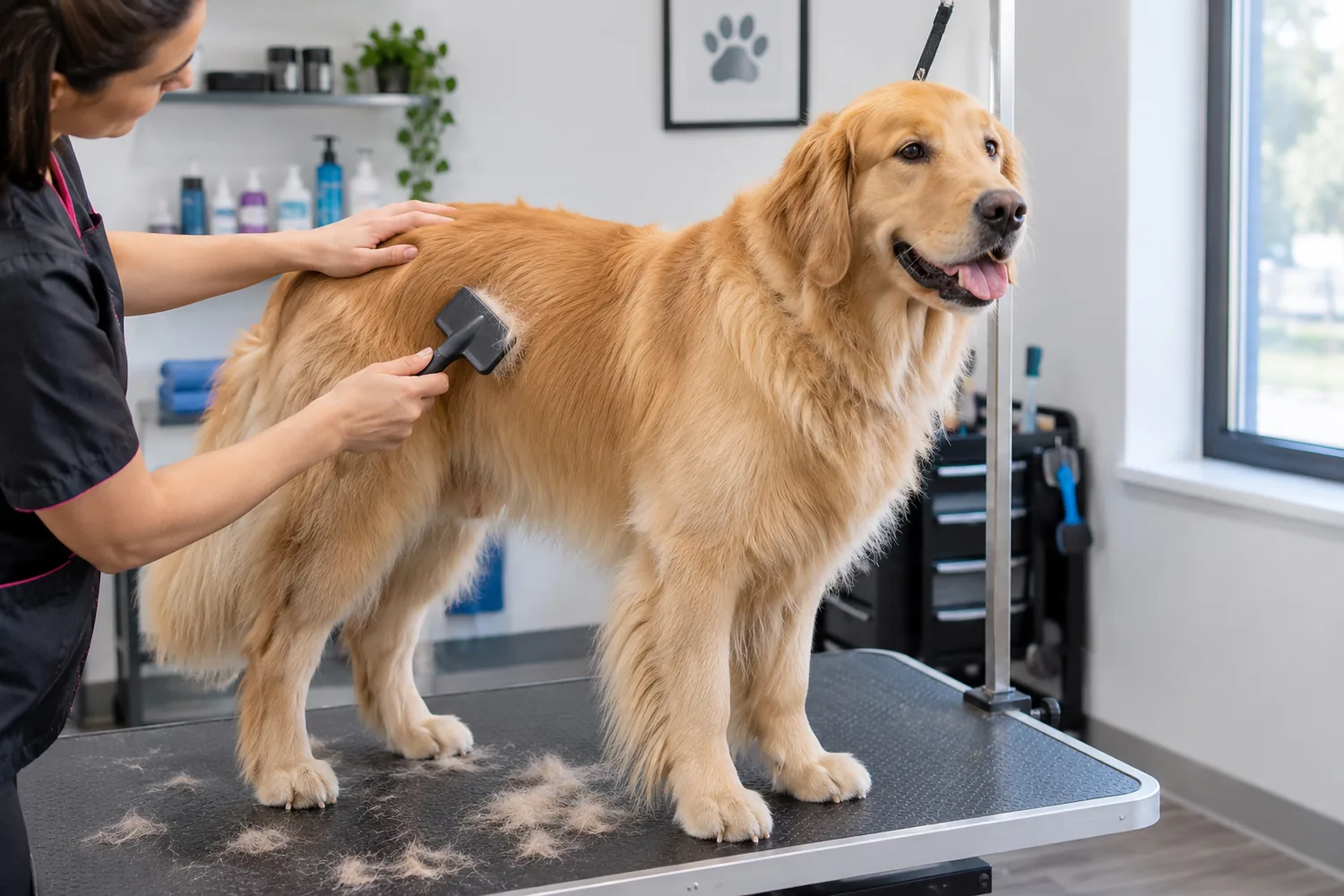
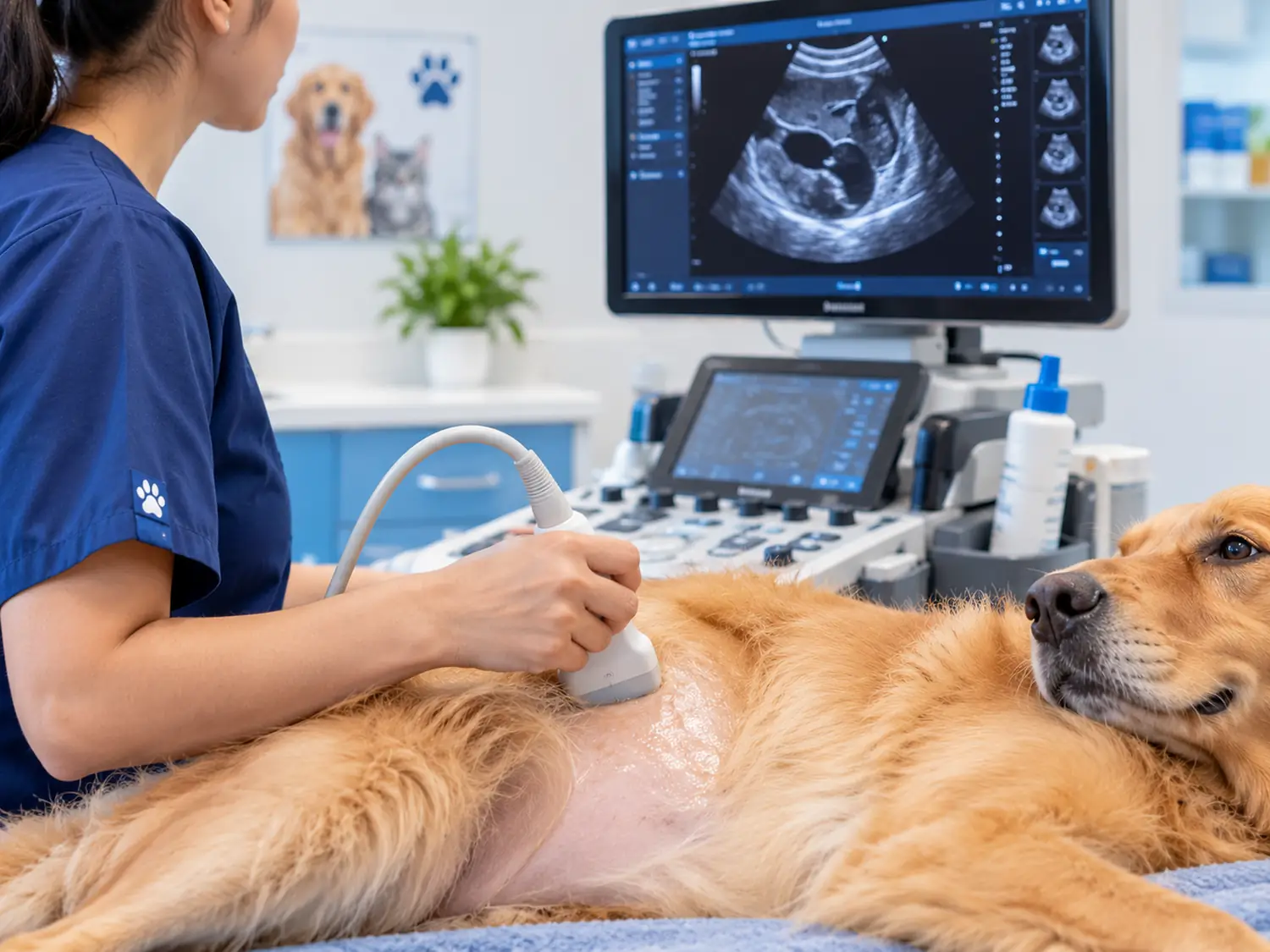
A microchip scanner passed over a dog's shoulders Microchipping Do it in the same visit, and do it before the rabies dose if travel is even a possibility. Read more → A vet treating a pet inside the owner's home Home vet visit We bring the vaccines to you. For a multi-cat household it is far less stressful than three carriers. Read more → The pet taxi vehicle with a carrier being loaded Pet taxi We collect, vaccinate and bring your pet home, with a call about how it went before they arrive. Read more → A flea comb being used on a cat Flea, tick & deworming The other half of preventive care, and the half that actually needs doing all year here. Read more → A groomer working through a golden retriever's coat on the grooming table Pet grooming Groomers and boarding kennels ask for a current record — worth timing the two together. Read more → An ultrasound probe on a calm patient Diagnostics An older pet due a booster is the right moment for bloods. Same visit, same day results. Read more →