 Veterinary Falcon
Pet Clinic LLC
Get a quote
Surgery, and the part you fear
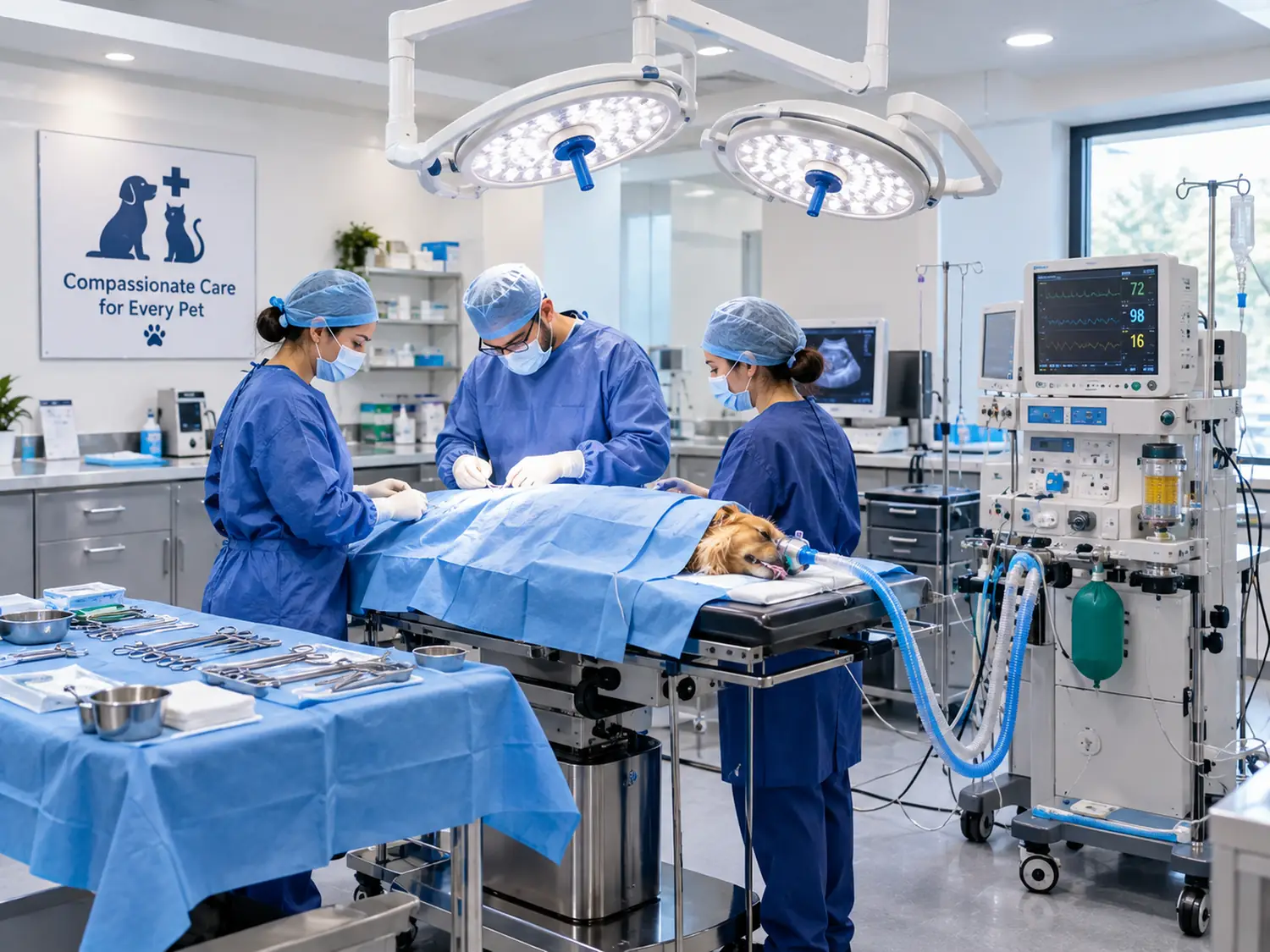
Nobody lies awake worrying about the incision. They worry their pet will not wake up. So this page is mostly about the anaesthetic, and what we do about it.
What is done in this building
The orthopaedic column is the one worth noticing. Most clinics of this size send fractures and cruciates somewhere else, which means a second consultation, a second set of notes and a surgeon who will never see the recheck.
Anything underlined has a page of its own.
Anaesthesia is not zero risk
Anybody who tells you otherwise should worry you more than the operation does. What is true is that most of the risk is manageable, and that nearly all of it is managed before the first incision rather than during it — with bloods that change which drugs we use, fluids and heat that hold a body steady, and somebody watching the numbers whose only job that hour is watching the numbers.
Monitored continuously, from the premed to the moment your pet lifts its head:
The day itself, in order
Most of the worry on a surgery day is not knowing what is happening while you are at work. So here it is.
Going home, and the ten days after
Questions owners ask
Will my pet wake up?
Almost certainly, and we will not pretend the risk is zero — anyone who tells you it is should worry you more than the surgery does. What we can tell you is what actually lowers it: bloods before rather than after, a nurse on the monitor and nothing else, fluids and heat throughout, and the first hour of recovery watched rather than assumed.
Do you run blood tests before anaesthesia?
We recommend them for every animal and we will push for them in anything over about seven, or anything that has not been seen recently. They are looking for the kidney or liver problem that changes which drugs we use — the sort of thing an outwardly healthy pet hides well.
Can I stay with my pet?
Until the premed, yes, and most owners find that is the part that helps. After that it is a sterile theatre and you would be watching through glass, which helps nobody.
My pet is old. Is surgery still sensible?
Age is not a disease. A healthy twelve-year-old with good bloods is often a better anaesthetic candidate than a young animal with something undiagnosed. What changes with age is how carefully we look first, not whether we can.
Do you really do orthopaedic surgery here?
Yes — fracture repair and cruciate work are done in this building rather than referred on. That matters for cost, and it matters more for continuity: the person who operated is the person who sees the recheck.
Can the surgery be done at home?
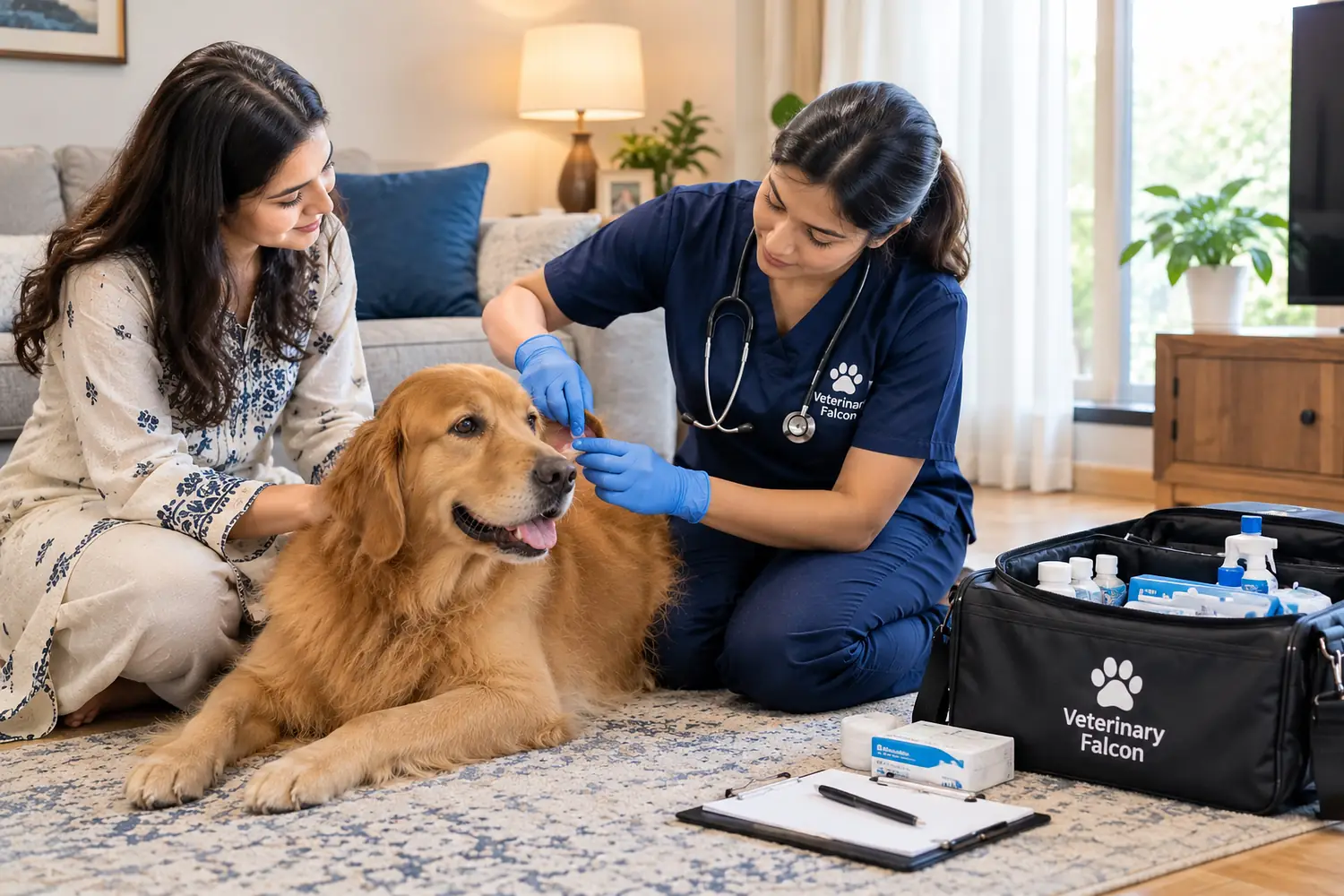
No, and be wary of anyone who offers. Anaesthesia needs oxygen, monitoring, a sterile field and a recovery area. The aftercare can come to you, and often should — suture removal and post-op checks are easy at home.
What owners say, in their own words
Every review on our Google Business Profile is written by an owner, not by us. We do not publish selected quotes here — read them all, in full and unedited, on Google.
Around the operation
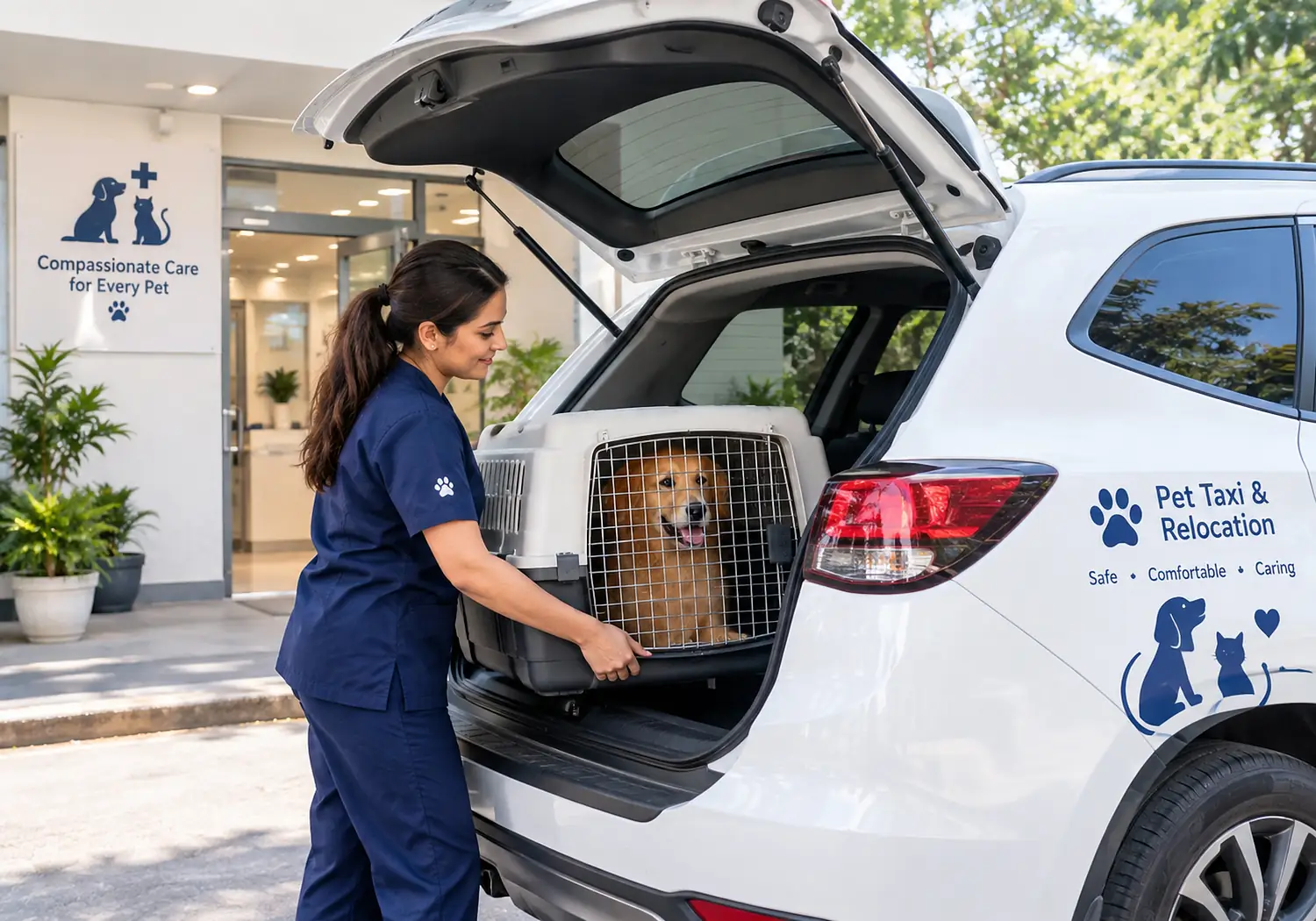
The bloods before it, the journey to it, and the checks after — all in the same place, on the same notes.
Tell us what has been recommended
Including a second opinion on a surgery another clinic has suggested. Bring or attach any x-rays and notes you already have — we would rather read them than repeat them.
Prefer to talk? +971 50 345 0534 or WhatsApp.