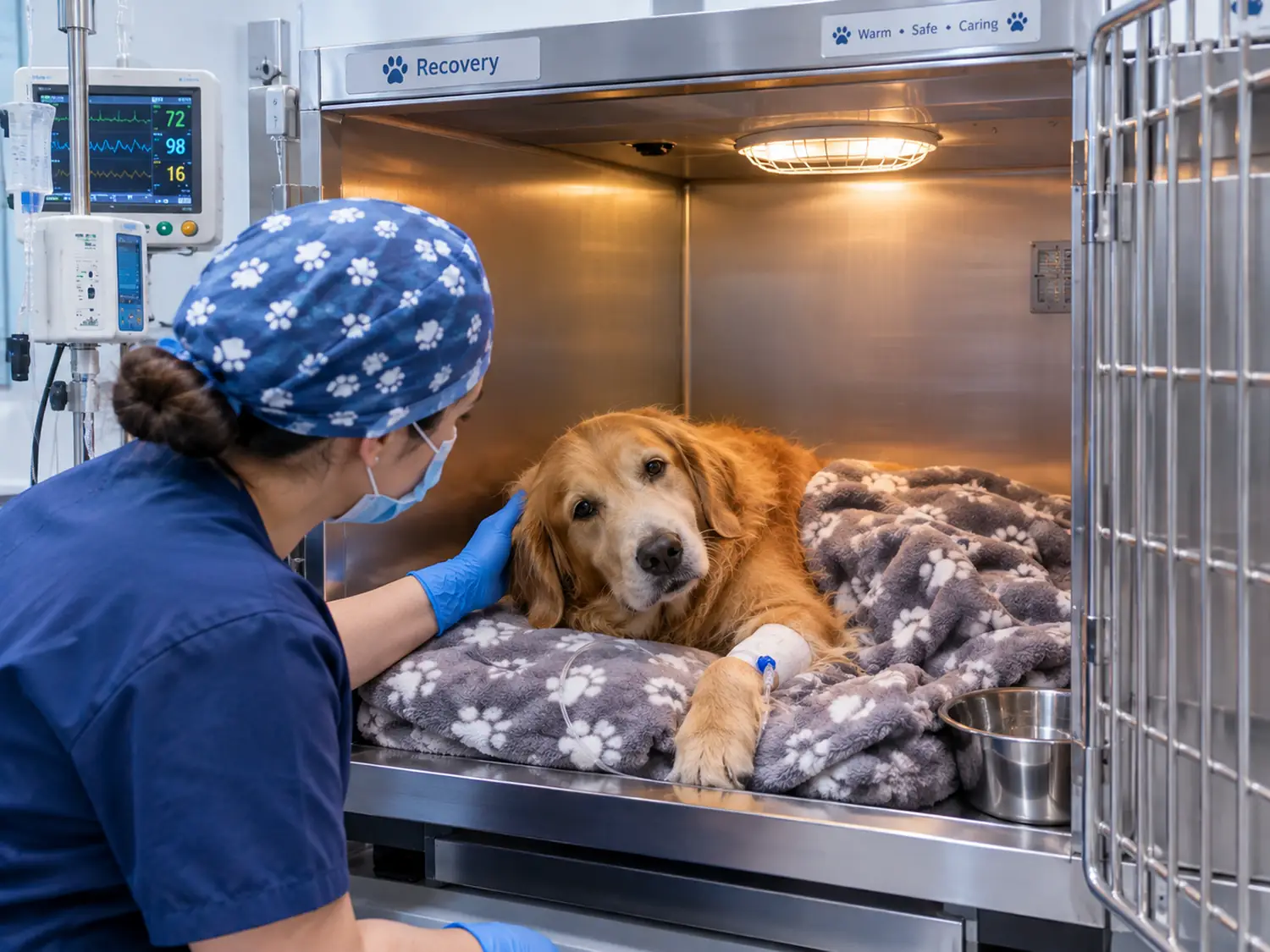
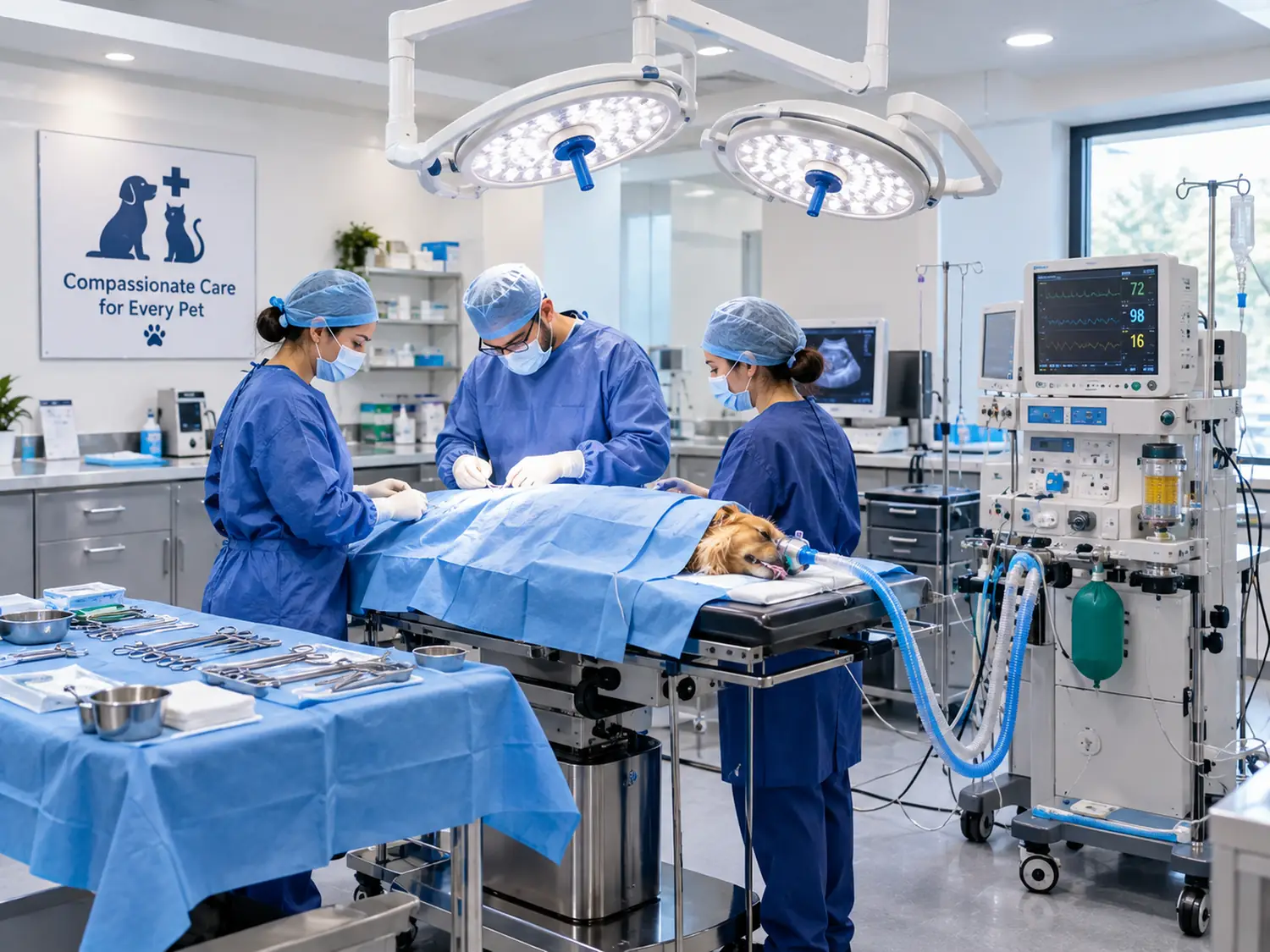
The operation is the part we control. The two weeks afterwards happen in your living room, and almost everything that goes wrong in them is preventable. Here is what you need, what you do not, and when to ring.
The pain relief, already startedGiven before your pet wakes rather than after it hurts, and sent home with you. It is the single thing that most changes how the first three days go.
Whatever stops them reaching the woundFitted here, on your animal, before you leave. Not handed over in a packet to work out at home at ten at night.
Written instructions, not spoken onesNobody remembers a conversation held while holding a dazed animal. Everything is on paper, with the recheck dates already on it.
A direct number for the next fortnightIf something looks wrong at any hour, ring. We would far rather look at a photograph of a wound that turns out to be fine.
The decision that shapes the fortnight
Cone or recovery suit?
Neither one is the right answer for every operation, and anybody who tells you otherwise is selling one of them. It depends on where the wound is and on what your particular animal will put up with.
The plastic coneWorks on almost everythingNothing else is as reliably out of reach, and for a head, ear or eye there is no substitute.Cheap, washable, replaceableIf it cracks on a door frame at midnight, another one costs almost nothing.Dogs bump into thingsDoorways, your shins, the stairs. Most adapt in a day or two; some never do.Some cats stop eating in itWatch the bowl. A cat that has not eaten in twenty-four hours is a problem in its own right.
The recovery suitFar better toleratedMost animals behave almost normally in one, which matters more than it sounds over fourteen days.Covers a body wound properlyFor a spay, a lump removal on the flank or a chest wound it is usually the better answer.Useless for anything on the headEars, eyes, face, feet — the suit cannot help, and the cone goes back on.Needs a second oneIt comes off for the toilet and it will get soiled. One in the wash, one on the animal.
Try both before you buy either. We fit both here and let you see which one your animal tolerates before you commit to it. That is five minutes at the counter and it is the difference between a calm fortnight and three trips back to have stitches re-done.
On the shelf, behind the counter
The recovery kit, in three groups
Grouped by the job each thing does rather than by brand, because after an operation nobody is shopping — they are trying to work out what they are missing.
Group 01Stopping them reaching it
Recovery suitCats and dogs, sized on the animal. Two is the right number.
Plastic coneIn the sizes that actually fit, including the very small and the very large.
Soft and inflatable collarsGentler, and defeated by a determined dog. We will say which yours is.
Group 02Keeping the wound clean
Saline and clean gauzeAlmost always all a wound needs. Nothing stronger without being told to.
Dressings and self-adhesive bandageFor limb wounds, with the warning that a tight bandage does real damage.
A waterproof cover for walksOnly while outside, and off the moment they are back in.
Group 03Keeping them still and comfortable
A crate or pen, borrowed or boughtRest is the treatment. Most failed recoveries are an animal that was allowed to jump.
A flat, washable bedLow enough to step onto, and washable at sixty degrees.
A harness, not a collarFor any neck, chest or throat surgery, and for a dog that pulls on the way to the recheck.
Easy, tempting foodAppetite is slow for a day or two. Something warm and strong-smelling does more than coaxing.
Five things not to buy, and one never to give
A pet shop with a recovery shelf has every reason to stay quiet about this list. Every item on it is sold widely, and every one of them we see go wrong.
Human painkillers, of any kindParacetamol and ibuprofen are the two commonest causes of poisoning we see, and an animal in post-operative discomfort is exactly when a kind owner reaches for them. If the pain relief we sent is not enough, ring us. There is always something else we can do.
Antiseptic on a surgical woundIodine, chlorhexidine, alcohol, tea tree, turmeric. A closed surgical wound does not want any of it; most of it kills the new tissue trying to form and all of it stings. Clean water or saline, or nothing at all.
Anti-lick spraysBitter sprays rarely stop a determined animal and they sting a fresh wound. The physical barrier is the thing that works. Spend the money on a second suit.
A cone two sizes too bigBought on the theory that bigger is safer. It is not — it catches on everything, the animal panics, and it comes off. The right size is the one fitted here.
Dressing it yourself to be helpfulCovering a wound that was left open on purpose traps moisture and infection underneath. If it was meant to be dressed, it left here dressed.
How the fortnight actually goes
Worth reading before the day of the operation rather than on it.
The first nightQuiet, warm, and somewhere they cannot jump down from. Small amounts of water, and food only if they want it. A little whining and shivering as the anaesthetic clears is normal.Days one to threeThe sorest stretch, and the one the pain relief is for. Lead toilet breaks only. Check the wound twice a day — a little pink and a little swollen is expected.Days three to tenThey feel better and that is the danger. Most wound breakdowns we see happen in this window, on a dog that was finally allowed to run.Day ten to fourteenStitches out, or the dissolving ones are well on their way. The person who operated sees them, not somebody reading the notes. Pet surgery →
Ring us the same day if you see any of this
None of it is a reason to feel foolish for calling. A photograph on WhatsApp settles most of them in a minute.
A wound that is open, or bleeding more than a spotDischarge that is yellow, green or smellsSwelling that is hot, hard or growing after day threeNot eating at all by the second day, or repeated vomitingPain that the medication is clearly not coveringAnything you simply do not like the look of — send a photograph
 Veterinary Falcon
Pet Clinic LLC
Get a quote